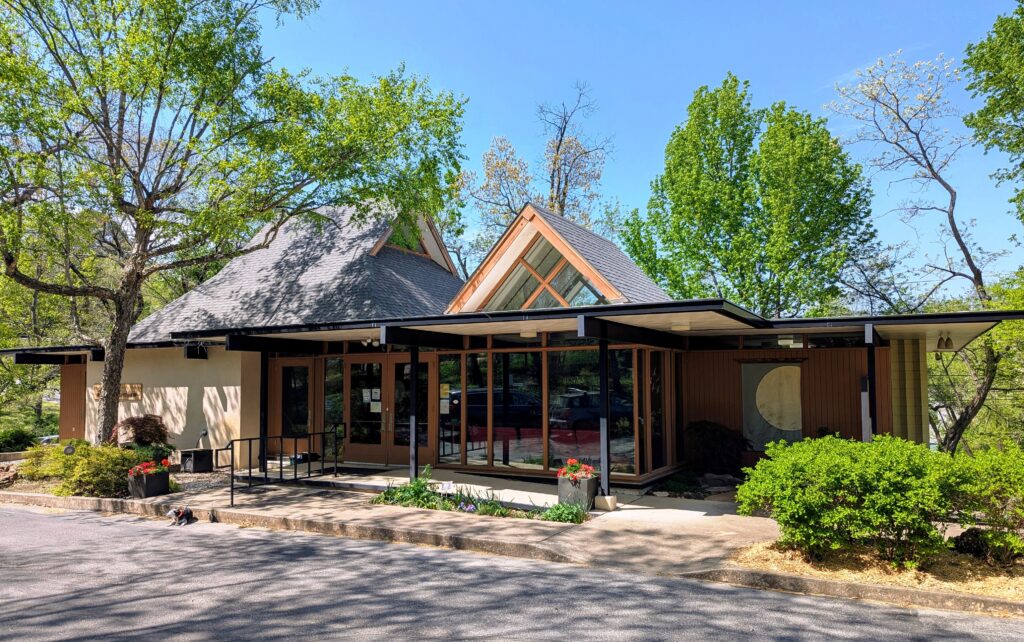
With Rev. Jim Parrish
Jan 6: An Old Woman Speaks
A lay led service. Words by UUFF member Sue Coppernoll. Arranged by Jules Taylor.
Dec 9: The Perfect Heart
Led by Rev Jim Parrish
UUFF Thanksgiving Potluck and Games
We are delighted that our communal Sharing of Thanks on Thursday, November 22nd was covered by local news station KNWA! The potluck was a wonderful way to support and get to know local residents and anyone who needed food or a place to go on Thanksgiving.
The Justice Team Does Congress (sort of)
By Rebecca Bryant
The Arkansas Citizen’s First Congress (ACFC) is a coalition of organizations working for progressive change –- primarily by lobbying the Arkansas legislature. Assisting ACFC in this effort is their tandem organization, the Arkansas Public Policy Panel, which monitors all bills in the Arkansas legislature and retains full-time lobbyists on staff.
In 2017, UUFF began supporting the Arkansas Citizen’s First Congress as one of the Justice Team’s picks for ‘Share the Plate’. In 2018, we persuaded the board to let us use that money to purchase a membership with ACFC, rather than simply making a donation. That membership gave us the privilege of sending delegates to the organization’s Congress of members that takes place every two years.
Four delegates (Shermon Brown, Maren Chism, Karl Brown, Rebecca Bryant) attended the 2018 Congress which took place from June 8-10 in Little Rock. On Friday evening, following dinner at the Sheraton Midtown, we heard presentations from member groups, describing why they do their work. Speakers included Alyce Love from the Desha County Social Justice Alliance, Ginny Massullo from the Buffalo River Watershed Alliance, and Furonda Brasfield with Decarcerate.
For the rest of the weekend, our mission was to identify five short term goals that would become the focus of lobbying through the next legislative session. Justice Team members spread out through the four caucuses; Civil Rights, Economic Justice, Environment, and Education, taking part in their deliberations.
By the end of the weekend, the Congress had passed five resolutions: 1. Support fair residential landlord-tenant laws (tenants have little protection at present); 2. Support a juvenile diversion program (i.e. try to keep minors out of the prison pipeline); 3. Upgrade Arkansas’s voter registration system (championed by the League of Women Voters); 4. Deter wage theft; and, 5. Support equity in professional licensure (In Arkansas, for a variety of professions, licenses cannot be issued to noncitizens).
I’ve known about the Citizen’s First Congress and Arkansas Public Policy Panel for decades. But, this was my first immersion in their process. Meeting others that are also engaged in the fight for justice and hearing their stories and ambitions was inspiring. Adding the small voice of UUFF to that of nearly 60 other organizations makes us a chorus with a chance of being heard.
Wild and Free Thoughts about Stuff…
Four AM wild thoughts time:
I am ruminating on the artificiality of Canadians/USA/Mexicans as “units” competing with each other to live – to have food, water, shelter, and comfort over the other, as if we are not all human beings in need. Governance and economic systems are artificial boundaries, flags and trade agreements are just stories made up to divide and conquer when the central narrative should be “how can we help each other.” Laws are made to legitimize stealing from some to enrich others. The bottom line is not human or humane, but about greed.
I’m tired of the competitive bullshit, the monetizing of everything to take love and care out of the exchange between people. People compelled to measure themselves as success or failure by bank accounts instead of the art, music, care, thought, cooperation, and Love they bring to life. No wonder we are an addicted society, a broken culture… everyone’s worth and dignity is bought and sold, incarcerated and monitored, monetized and advertised as if it was never ours to begin with.
When did I sell myself/yourself into this? Probably long ago in childhood while watching tv, seduced by some ad for this or that, inculcated into the mother supremacy culture story. How do I/we buy ourselves back? Maybe by small acts of defiance – by acting as if there are no Mexicans, Canadians, US… just hold onto each other as human beings, as people of the planet – together. That should disturb someone.
We will find ways to reclaim humanity, we have to. Vote for someone else’s worth and dignity before your own, and we will bend towards justice even a little bit more every time.
Our OWL program featured in the news
On July 25, 2018 Kyle Kellams hosted OWL facilitators Lydia Nelson and Theresa Parrish for a segment of Ozarks at Large Today on KUAF, a National Public Radio affiliate.
The interview focused on the upcoming OWL class for grades 10-12 and evidence informed, comprehensive sexuality education in Arkansas and in general.
Find and hear the interview online.
A Missional Fellowship
To Be
Determined,
May 2018
Rev. Jim Parrish
Our Mission: As a diverse, accepting faith community, we promote justice and service while seeking personal and spiritual growth. (2014)
To accomplish our Mission we shall:
- Serve as a welcoming religious community for all who practice a liberal religious life in agreement with our Principles and Covenant.
- Open our hearts and doors for those in need; share laughter with those celebrating, and comfort those in sadness and grief.
- Strive to be a center of excellence for intellectual, emotional, personal, and spiritual learning, and promote growth and dialogue between ours and other sources of religious and spiritual life.
- Provide ourselves and the wider community with resources of venue, volunteers, programming, and leadership to make personal and societal changes towards love, happiness, equality, and justice.
Recently several members of UUFF, and one from our Web of Life affinity group, participated in a University of Arkansas class at the invitation of their professor. The class was nine or so students of sociology, many working towards a counseling degree, and the subject was the attitudes and coping mechanisms of folks who are of a “minority” religion in a region where mainline Christianity was dominant. Mike McMullin, Sarah Faitak, and I would represent our different ways of being Unitarian Universalist, and Ethan Whiting would speak to being “Pagan,” an earth centered religious belief system. The class was run by Professor Mindy Bradley, who is also UU, and we spent a couple of hours having a wonderful conversation about religion, beliefs, spirituality, and dealing with work, social, and community prejudices.
Before we started, I invited the class to introduce themselves to us and tell of their own religious beliefs and journeys. We want to hear who they were religiously, so we could be comfortable when we shared our stories. What we heard was enlightening, and to me missional to UUFF. I would say two thirds of the class were open in their religious journey, and very much Unitarian Universalist in attitude and practice. There was acknowledgement of interest in Earth Spirituality as well. When we visitors began sharing our own backgrounds and journeys to UU and Paganism, we were among folks who could be us. They understood that we were proud to be liberal religionists, that we live our UU Principles and beliefs in our lives while at home, work, and as activists in the community. I felt these students were committed to doing good in the world, and our Principles are compatible with them. And yes, I did give them a copy of our Principles and Sources as reference materials, along with a bookmark with our UUFF address on it. UU evangelism!
So here is the tie into our Mission and its Goals – Many students are our people who just need to know we exist. We need to help them get into the wider world with Unitarian Universalism as their underlying religious community. Some of them may stay in Fayetteville, but many will leave… to go to other cities and towns to join UU churches, or at least help others find us (“Say, you sound as if you are UU, you should check them out!”). If we are going to get the “Nones,” (the religiously unaffiliated who need community but do not want to have their religion dictated to them), as UU, we need to be visible and relevant to them. Many of these Nones on campus are of diverse cultural backgrounds who need to know they have a place and people who accept them.
At the very least… maybe we can be a place that can care for and feed them regularly? Student hunger is a thing. There are many students who are on the edge financially, and soup kitchens for them is not beyond thought, or better yet, a night of food, coffee, study and relaxation in a UU setting. Other churches are hosting community meals at this time.
Here is another thought, if we become visible to the students, we are visible to the faculty who need us as well. We need them to see us too.
UUFF and our Y’ALL group, Young Adults Leading and Learning, have attracted a number of fantastic students these past few years, and we enjoy their time with us – even though we struggle to know what to do for and with them! They have such energy, but have to spend it studying and transitioning their lives from school to the world, and yes, work. Which brings up another point… on top of this student thing, there are Young Adults who WORK in our community! And they need to know we exist and have our support as well… our understanding of how to be a caring religious community for their needs as well!
I think we should ask YA students and workers what they need from a religious community like us, ask ourselves how might we do it, and do it well… so I’m asking. We have this building near campus that needs updating, but it can serve right now to introduce students and working YAs to UU, let them feel like there is a religious community who has their back. Our Y’ALL folks have been doing this for a couple of years now, by gathering to share in entertainment, food, and discussion. How can we support them, how can we do this better?
One of our mission goals is to serve as a welcoming community for liberal religionists. This takes advertising, being found, and providing a proper, consistent and appropriate venue for spiritual learning in community. We have this huge population of students and faculty right next to us to explore and welcome, as well as the cities full of working YAs all around us. I know it has been a tough sell in the past, but I see us as Y’ALL doing it right! The lessons Young Adults can teach us will help with outreach to the rest of Fayetteville as well, to those working YAs who need to know who we are.
This isn’t the only outreach we should consider, but I’m writing this so we start thinking about our mission and where it might take us. The University and Young Adults of all kinds are a possibility of mission focus, and I’d love for us to think of other goals so we can prioritize, marshal our resources, and move our mission forward! UUFF has lots of potential, really a lot that hasn’t been tapped, and I think having missional goals that we can see and feel will draw this potential out.
Like music! More music! A great missional goal… excellence in worship and spiritual development! And Young Adults love music! But that is another article and more discussion, right? Your Board in on it… looking to the future, let’s think about how wonderful it could be, and help it become.
Peace,
Jim
Rev. Jim Parrish
The Worship Hot Tub
In late January I spent a week at an event called the “Center Institute for Excellence in Ministry” hosted by the Unitarian Universalist Ministerial Association (UUMA), to which I belong. The focus of the institute is just as its title says, “Excellence in Ministry,” and it goes about the work in unexpected ways. If there is something ministers do not typically get it is regular occasions to be in worship, to have other ministers hold onto us with their words, music, and liturgy, so we might be nourished in our religious lives. The week at the institute included, besides seminars and classes to learn and renew ministerial arts, a full worship and vespers every day to immerse oneself within. Being a retreat of ministers by ministers, our worship was full of exploration and revelation, and too many moments where a phrase or word made one pause in reflection, or tension, change, and renewal.
One of those phrases that held me was this: “worship and liturgy is not a “sit and soak” gathering.” I do not specifically remember what words came before or after except that it generated this phrase in my notebook as I reflected on the them:
Worship and liturgy is not a “sit and soak” gathering, but the work of the people to become and build what they wish for themselves and the world.
The work of the people to become.
This means you, and me (and other worship leaders) working on a Sunday morning to make something new… the work of the people to become. How does this happen in worship? Aren’t we just “sitting and soaking” in words and music?
Worship in UU is to raise up our highest ideals for examination and renewal – to bring the meanings of our Principles and Sources to our attention, and hold them up to our personal and public lives. It is a complex dance as well, because not all of us are in the same place at the same time. Among others, there are the social justice warriors who are carrying the fire of change in their heart, there are those hurt by life, by economics, by relationships, who needs to be held in community for strength and comfort, and those who look for communal inspiration for UUFF to be a place of change for themselves and the society around them.
Our Mission Statement holds all of this:
As a diverse, accepting faith community, we promote justice and service while seeking personal and spiritual growth.
At the Institute I witnessed worship that gathered us together as a people, raised us up in solidarity, called us into right relationship, and held us accountable for the ideals we hold. We sat and soaked, we stood and sang, we listened and thought, and most of all, we knew that we were Unitarian Universalists together on a mission to become something better, all the time, and drag the world along with us as we were able.
One of my goals this year is to open Sunday worship to this kind of experience, to hold onto each other as UUs, to highlight our mission of Service for Justice, and open space to find personal and spiritual growth. What I gained from the Institute is that Sunday is not about one person dragging everyone along, but about us working together towards a “hot tub of UU,” soaking in the shared energy, to accomplish a goal. Our Chalice Team’s planning, Choir Accompanist and Director’s holding of musical/emotional space, and our Welcome Team’s (greeter/ushers/service coordinators) ability to integrate everyone to UUFF on a Sunday morning are vital to the shared story and message of the service. Your understanding of who you are as a UU, what our mission is as a Fellowship is and sharing it as a congregation is the soak that makes a difference. The service is a catalyst, the invitation to jump into the water, but you my dear congregation, you are the water, the energy that makes the work towards change happen.
I, and others who minister to you on a Sunday, will invite you to the tub, will provide the bubbles, the jets of thought, music, and contemplation in worship. It is the work of the people to build community in worship, revitalize and energize each other with your presence, to go out into the world refreshed and renewed spiritually, ready to do the work and build what you dream of. Dreams of personal growth in a world that is about justice and peace, and worth and dignity.
Peace, Rev. Jim Parrish
PS: I share with you one of the songs we sang constantly at institute… that tied the week together. Enjoy.
New Year, New Thoughts…
Well, I’ll just say, it is a New Year and Happiness is ours to find in it… and I do hope you find yours! (I’ll help if I can).
So let’s start the year with some religious thought in the vein of “what is this that we do” as liberal religionists.
I recently read an article that posited putting walls around the definition and sources of the word “Philosophy” defeats its usefulness. Definitions that hold philosophy to be strictly historic/academic versions like Stoicism, Euro-centric, or Greek, etc., without a dialogue between the many public versions humans create (Malcolm X, African Ubuntu, Wendell Berry, etc.), makes the practice of philosophy limited and incapable of being useful for ultimate human good. For example, if the philosophy of life found within Rumi’s poetry is rejected by academic “philosophy” because it is foreign and (shock!) poetry, then it is not a wholly useful definition, but an orthodoxy – an approved form that rejects all others.
I’d replace the word “philosophy” with “religion” in the same argument. When a religious body claims ultimate truth by placing walls around it, then its capability of holding humanity in all its complexity, in all of its needs, is lost. This can be demonstrated by every “ultimate truth” Christian sect formed to replace the former “truth” sect that didn’t get it just right, so people go and form a “better” sect. The walls put up invite the need for continual “reformation.” This happens in other religious groups as well, even in Unitarian Universalism. For example, some UUs would reject some of our stated Sources of religious thought/truth as being irrational, even though the source has a historically long and successful meaning in human development, therefore has a rational reason for existing (and being reformed as well). Something in every source we name has social evolutionary meaning, so maybe the best thing to do is to learn from the thought so it is not lost, or help in the dialogue that makes it and us up to date with our personal and cultural needs.
Want to have a robust and capable Religion or Philosophy? (Aside: I use these words interchangeably sometimes, defining them as instructives on “How We Live,” because both terms contain the effort to explain or define how we live our lives: some of the “how we live” coming from the instruction of a religion/philosophy, some coming from parental culture, some from education, some from experience, and some from many other sources, etc.) So, back to the question, how to have a robust Religion/Philosophy? Using the definition argument above, to have a robust religion/philosophy is to open it up to broad study of human thought and culture for the possibility of reformation. Open the definition so as to invite new revelations, and celebrate the many small truths humanity has discovered for living a peaceful, capable, interconnected, and full human life. Learn ways to live and be whole with instruction from wise individuals and a diversity of human experience. Glean wisdom from many cultures and societies, and from study and connection to our natural world, its plants and animals and how they live. When we become entrenched in labels and ideologies as our focus, from liberal to conservative, we’re probably as stuck as someone we are tut-tutting about.
In Unitarian Universalism we tend to hang onto our Principles as our communal “golden rule” ideals that make us UU. We are fortunate that they are malleable, so as to not become “creedal,” but in the end, they are not enough to make us UU, or keep us from orthodoxy. This takes more, takes a place of tension that we learn in. I believe it is dialogue within our stated Sources that we UUs can be “saved” from orthodoxy, the very piece of our covenant that we tend to ignore. The UU Sources hold our richest mine of human endeavor for peace and justice, religious/philosophical instruction as well as freedom from definitions that wall us off from the rest of humanity. I also believe they are, like the Principles, not complete.
Our Sources range from recognizing that humanity has a spiritual side with a common sense of awe and wonder about the mystery of who and where we are in the cosmos, to recognizing various religious and rational stances in understanding life, to holding sacred our relationship with the universe, the earth, and the circle of life that we are interconnected within. I believe we can read into our Sources much of what I speak of above; permission to an open search of human, natural, and cosmic sources of wisdom and knowledge so we do not become entrenched in our walls of orthodoxy. But this is where I think we UUs are like many other religion/philosophers, we tend to be comfortable in our place of belief, our personal line of Source that we hold onto tightly. I can understand this, as a life story takes work, a consistent narrative to hold us together, and keeping an open edge to our Source(s) takes energy that our society does not afford us easily. It’s a wonder Unitarian Universalism exists (and that has brought on another thought about classism for another essay), but it thankfully does, so you and I, and hopefully many others, figure out that its Open Source way of religion is truly a salvation for humankind.
Our recent foray into #MeToo, and the underlying power structures of our society built on sexual violence, is an example of being able to step away from the orthodox narrative and recognize the reality we live within. UUs are free to formulate ways to change us and society for the better in ways other religions and philosophies are not. We listened to feminist philosophers beginning in the 60s, building on our Suffrage legacy out of the 1800’s, to grow and change. To be a bit self congratulatory, UU recognized the sexual power imbalance decades ago, and began reformations that are recognized today as cutting edge. We have more than 50% female identified clergy in our denomination, with a substantial percentage of LGBTQ clergy and leadership as well. We began advanced assessment and training for seminarians about appropriate sexual boundaries before it became a crisis with the Roman Catholic Church revelations. And we have (with UCC) Our Whole Lives sexuality and relationship programming along with advanced programs for multicultural training. All coming from listening to Sources outside the mainstream.
But I still see congregants divided by their Sources, and we need to work on this. As a longtime Humanist myself, I was pleasantly surprised by the scientists (evolutionary biologist Ursula Goodenough for one) who, in the last decade, joined with Humanist and Theist theologians to bring several sources together into Religious Naturalism (RN). Religious Naturalism is an old idea having a resurgence with the need for religion and science to find relevancy for generations who live in both worlds. RN is still finding its way, but the dialogue it brings between science, rationalism, earth spirituality, and an evolving theism is fascinating and full of boundary crossing potential. RN is the result of rejecting orthodoxy for synthesis, and has the potential to bring humanity closer together. I see a lot of growth that RN needs to do, but its potential is vast. (RN website)
So… here is our personal project as a Unitarian Universalists (Invitation to others too!): to review our Sources of being, and ask which you resonate with, then ask for our community UUFF, to help in exploring the sources in greater depth! I would love to have this conversation, this dialogue! It is how we’ll be even more free in our religious life. I would even like help developing a new Source… one that celebrates the individual in community, each one of us in our diverse glory, and what we bring to the dialogue that is life.
So goes my beginning of the year essay… let’s see where it leads.
Oct. 29, 2017 “Remembering Our Dead: Love Lives On”
On Remembering:
Human beings are odd creatures, but I think we come by it naturally, evolved into our oddness that is. I don’t believe we are the only animal that mourns our dead, but we may be the only ones who worry about it so much that we create myriads of interesting, imaginative places for them to reside until we join them. For myself, at one time, I decided that if after death there is a remnant of the pitiful being called by my name left in the quantum foundations of this universe, I would like to explore the galaxies and see if there are multi-universes. But as I age I find that this seems as lonely as being gathered to some super-being to sing its praises. I think I’ll not worry about it, live while I can, and take some time to remember and bring to life family and friends I treasure in my own mind and heart… universe enough, if someone will do this for me.
Remembering our dead, our ancestors, can be a healthy (and emotional) exercise in being human, in holding onto the lessons they can teach us. As I think about it, for a robust religious (how we live) component of remembering our ancestors, we would examine the lessons taught by that life and be warmed by, warned of, or both, of living such a way. I think there would be stories of puzzling lives that we would not understand, exemplary lives with feet of clay, lives that frighten, lives of devotion, lives of pain, lives of love… all kinds of complex, ways of being human. None would be valueless, all giving us clues to our own life, even as we remember them.
If we grew up in a society that had a strong ancestor worship component of its religion(s), our life would be understood as a book to be examined by those coming after us, and a framework of ethics and morals from that culture of examination, a village of people including those long gone, would help raise us. It may be that our U.S. culture of individualism is why we never developed ancestor worship seriously, and that may be to our detriment. On the other hand, a society that holds its values as deep as death may not be able to examine itself seriously for prejudices, built in bigotry, and inequality held by its dead. This may be demonstrated in statues to commemorate confederate war dead that do not ask the present population to look at their sins, but hold onto a false glory. Our dead need to be held in the light of present and future ethics, morals, and Principles, and their stories told within that light, so we learn how to change for the better as well. Maybe a gentle remembrance is a good thing compared to a culture of ancestor worship… something to ponder.
“Remembering our Dead: Love Lives On” is how we’ll frame our memorial service Sunday morning, October 29th at UUFF. We have traditions from different European and American cultures that guide us in ritual around this time of year including All Souls, Samhain, Dia de los Muertos, and African American Funerals. Especially informative for us are Unitarian Universalist Memorial Services, which recognize, celebrate, and grieve the whole life of the deceased, their shadows as well as their lights. We also know that for some the loss of an animal companion needs to be recognized as well, that love and loyalty is not just human.
This is not an easy service, it holds in it loss, grief, tears, and maybe some anger. But it also has laughter, love, caring, and lessons. Lessons of life lived and lost, of family and friends who hold onto the stories, the ups and downs, the joys, the grief, and mostly their love. This is a service for young and old, no one should be left out of this natural part of our “learning how to live with having to die.” Bring a picture, a memento, favorite food, something that reminds you of your loved one, and place it on our Remembrance Altar. We will speak the names of those to be remembered, and take time to honor them in poetry, music, story and silence.
Peace,
Rev. Jim Parrish
Our Whole Lives (OWL) Sexuality Education: Active Resistance in Tenuous Times
By Theresa Parrish, appeared in Sept/Oct 2017 issue of The Beacon
Unitarian Universalists take pride in our open minds and open hearts. We welcome difference and diversity. We lean into controversy and educate ourselves on issues. Recent events in Charlottesville, repeated attacks on Planned Parenthood and abortion access, and threatened cuts to healthcare and social programs have caused many of us to feel anxious about the future of our country and about the immediate health and safety of our loved ones.
What does all this have to do with Our Whole Lives – the evidence-informed, lifespan sexuality education curriculum co-authored by the Unitarian Universalist Association and the United Church of Christ? Everything!
Imagine Madison, who is much taller and heavier than their peers. After years of teasing and bullying, Madison believes there is something deeply wrong with them. They become depressed and suicidal.
And there is Adrian, whose friend pressures them to engage in sexual activity until they reluctantly give in. Adrian learns to associate sexuality with shame.
Or Jaden, who feels attracted to a friend of the same sex and who was told by their conservative religious grandparent that homosexuality is sinful and disgusting.
And Angela, who wanted to talk to her boyfriend about birth control, but didn’t know where to start. Now she finds herself pregnant, worries that her parents will be enraged, and wonders if she will be able to finish school.
It’s not hard to imagine a bully who relentlessly calls a classmate “faggot,” “fairy,” and other derogatory names. The bully tries to persuade others to join in tormenting the victim. How many of us are prepared to respond in a way that honors our Unitarian Universalist values?
[Use of pronouns “they,” “their,” and “them” is intentional. Even the most enlightened people make assumptions and value judgments based on gender. What assumptions might you have made about the gender of the individuals in the scenarios above? ]All of these narratives occur regularly here in Northwest Arkansas. They are due, at least in part, to our reliance on sexuality education provided by public schools or by well-meaning but ill-informed parents (who are often dreadfully uncomfortable discussing anything sexual), or by no one at all. Much of the sexuality education provided in Arkansas (including here in Fayetteville) is based on the “abstinence only” model that charges youth to abstain from “sex” until marriage. Youth are often pressured into signing vows of chastity and are shown repulsive videos of sexually transmitted infections meant to scare them into “abstinence.” This propaganda leads young people to believe that any sexual contact will result in pregnancy, infection, or both. The material presented is flawed enough, but even more egregious is what is lacking — topics of relationships, of difference, of consent, and information on birth control that is comprehensive and medically accurate.
The theoretical basis of Our Whole Lives (OWL) runs contrary to all of this. OWL affirms that we are sexual beings from the moment we are born until the moment we die. We know that sexuality is a broad concept, involving not just genitalia and reproduction, but gender and orientation, relationships, consent, body image, families, justice, inclusivity, friendships, values, sexual health, contraception, and much more. This is all delivered by trained OWL facilitators in a safe setting and in an age-appropriate manner. What’s more, OWL acknowledges parents/caregivers as the primary source of sexuality education and involves them in their children’s classes.
OWL opens up the discussion on sexuality, empowering students of all ages with vocabulary and information that can help them navigate relationships with confidence. They come to understand their inherent rights as human beings and are equipped with vocabulary to express themselves. They are challenged to think deeply about various scenarios that might occur in their lives and to prepare to make informed, deliberate choices.
So, with experience of Our Whole Lives:
Madison might love their body just as it is, significantly decreasing the negative effects of bullying.
Adrian would have denied consent with confidence and might still see sexuality as positive.
Jaden would have an opportunity to accept t heir same-sex attraction as “normal” without fear of punishment or ostracism by family and church.
Angela would likely have discussed birth control and their relationship with her boyfriend, and her pregnancy might have been averted.
Fewer bystanders would have joined with the bully, and more would have protected the victim and spoken out.
In your mind’s eye, are you imagining a school-aged child – or perhaps a teenager – in all of these scenarios? While traditionally, sex-ed has been served up almost exclusively to pubescent youth and teens, OWL is for EVERYONE. Appropriate OWL classes are offered at all age levels, beginning with kindergarten and continuing through old age. And, if you are wondering what an older person might learn from sexuality education, consider that the incidence of sexually transmitted infections is rising significantly in adults aged 55 and up. Information about sexuality (and sexual health) constantly evolves. Social values are regularly re-examined. It is impossible to outgrow Our Whole Lives.
Children, youth, and adults who participate in OWL classes and/or who become educated in sexuality and relationships are people who are armed to resist misogyny, racism, homophobia, and transphobia. They are likely to be accepting of others. They tend to make healthier choices. They are not as easily manipulated. They are less likely to passively accept violations to their bodies and to their rights as human beings. They resist. Congress might move to de-fund Planned Parenthood and other public clinics. But if we are empowered with information and grounded in our values, we will find ways to practice safe sex, to prevent unplanned pregnancy, and to maintain our sexual health. We will continue to be actively inclusive and will protect the vulnerable in our midst. We will continue to take responsibility for our choices. We will not give in to bullies or terrorists.
We will be respectful, valued members of our families, our schools, our workplaces, and our communities. Confidence, knowledge, and values cannot be legislated.
Visit the OWL page on our website for more information on the program and upcoming classes.