• Skip to primary navigation
  • Skip to main content
  • Skip to primary sidebar
  • Skip to footer

UUFF

Your NWA home for a liberal religion

  • Visit
    • Minister’s Welcome
    • Getting Here
    • Sundays
  • Contact
  • Donate
  • About
    • Our Faith
      • Who are Unitarian Universalists?
      • Principles and Sources
      • The Flaming Chalice
    • Our Fellowship
      • Mission and Vision
      • Leadership
      • Location
      • Accessibility
      • Gardens & Grounds
    • Contact
    • Visit Us
    • Employment Opportunities
  • Worship
    • Sundays
    • Sermons
    • Music
  • Learning
    • Children & Youth
    • Adults
      • Covenant Groups
      • Adult RE Discussion Group
    • OWL: Lifespan Sexuality Education
    • New UU/Path to Membership
  • Justice
    • Accessibility
    • Good Works
    • Side with Love
    • Welcoming Congregation
    • Justice Calendar
  • Community
    • Pastoral Care
    • Groups
      • Chalice Circles
      • Meditation
      • Y’ALL
      • ARE Discussion Group
      • Web of Life
    • Circle Suppers
    • Membership
      • UUFF Cares
      • Become a Member
    • Volunteer
  • News & Events
    • Zoom Participation
    • UUFF Calendar
    • Upcoming Events
    • The Beacon
    • UUFF eNews
  • Giving
    • Pledge
    • Be of Service
  • Sunday Service 11 AM
You are here: Home / Archives for Fawn Smith

Fawn Smith

What’s Going on Outside?

October 8, 2017 by Fawn Smith

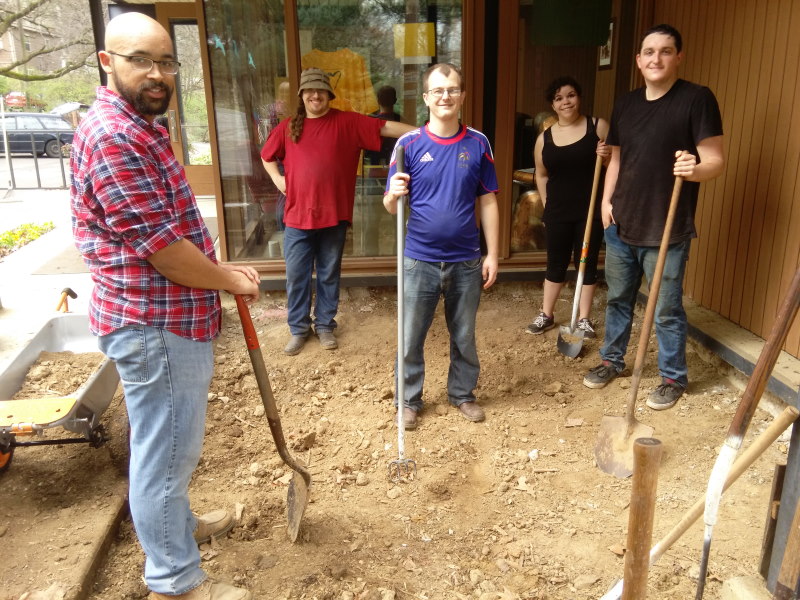
Making Space for the sculpture

(Photo from left to right: Karl Brown, Evan Barnes, Andrew Gaber, Staffany Rhame, and Dylan Pearson.)

by Andrew Gaber, Chair of Sculpture Committee and Board Membe

Many of you may have noticed the work that’s been started in the landscaping bed next to our entrance. This is the result of some of the first steps in preparing the space for permanent installation of the sculpture, The Book, that was graciously donated to UUFF by Richard Ferguson before his passing last year.
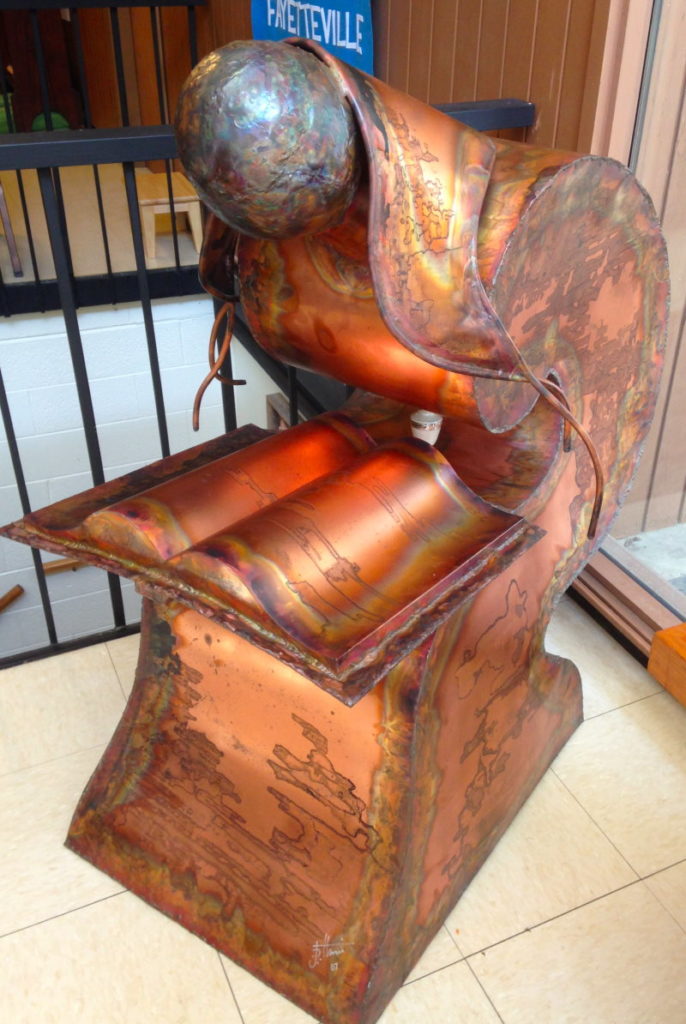
The Book, sculpture by Richard Ferguson

Members of the Sculpture Committee have been working on a plan for this space that will further our grounds’ function as a space for reflection. Members of this committee are Andrew Gaber (chair), Ron Hanson, John King, Caroline Lennox, Joyce Mendenhall, and Gretchen Wilkes. Currently, the vision is to have some paths placed in the space, with decorative gravel surrounding the paths. The sculpture itself will need to be filled with sand to secure the sculpture in place. If you have any thoughts or questions on this project, any of us on the committee would love to hear from you!
Filed Under: Beacon, Volunteer

Lunch With Jesus, a Modern Parable

August 2, 2017 by Fawn Smith

“Lunch With Jesus” is a story sermon written for the UU Fellowship of Fayetteville’s Easter service in 2015. Jesus is relevant to Unitarian Universalism in a way that continues to grow, mostly as one of our sources belonging to the “words and deeds of prophetic people.” If our religious ancestors had not reclaimed the historical Jesus – the transcendental, human, unitarian, universalist, and Liberationist Jesus, then UU would not be as it is today. I updated and reprised the sermon in 2017 as its message was still relevant, and even more urgent with the political and social changes surrounding us. Also, we had a number of new folks and children who had not heard it, and I love telling the story. This is the updated version from 2017, and a reminder: it is written more as a sermon, prose to be spoken.

“Lunch with Jesus”

Rev. Jim Parrish

The stories attributed to Jesus in the New Testament of the Christian Bible are known as the parables, and many of them are not so miraculous or supernatural, but of a human nature… a human nature that tells a story of how we should be and act on the side of love over separation, fear, and hate.

In our story for all ages this morning, “Jesus, The Carpenter’s Son,” author Sophia Lyon Fahs imagined the way Jesus learned what his religion, Judaism, meant to him ethically and morally. She wrote about how it influenced the way he wanted to live and teach, and why his religious life came to be one of peace and acceptance of others over violence and separation.

Jesus hung out with foreigners, tax collectors, prostitutes, and other people considered of common or “low stature,” but he also invited those with power or wealth into equity. He didn’t ask them for belief or loyalty, but by his actions and words demonstrated that they were all equal and loved in his heart, and that of his G-d. Jesus was open to people being people and finding love there.

Which, when you think about it, is really the best parenting model there is. How do we teach children? By yelling at them?

The Disciples would yell at Jesus that he was not “handing down the law!”

and I know that sometimes, as a parent, I would “hand down the law,”      and get nowhere…

But as I look back at my parenting years, I see that modeling what I believed to be “how we should live” (and this was not perfect) was the most effective thing my spouse and I could do as parents.

Jesus, in his sermons and parables, modeled a society that broke down barriers and lifted people up.

I was looking for a new story that illustrated this, a modern parable of Jesus, and not finding one, I wrote this about a Jesus of today…

~~~~

“The Parable of Lunch with Jesus”

Jesus was sleeping late in the back of our old Camp-More Recreational Vehicle. We’d pulled into the Indiana KOA in the wee hours of the morning, having gotten a late start the day before.

Somehow Lord Krishna and his biker gang had found us at our previous campsite, and of course, all heaven broke out. Krishna and Jesus played music into the wee hours of the morning, and us campers spent the night laughing, singing, and dancing along with them.

The next day, when we finally had enough sleep to be safe on the road, Krishna with his colorful entourage of bikers, and us in our old RV, waved goodbye and parted ways… a LOT later than we’d planned. So when we finally got to our next camp it was lunch we would be waking up to serve, which is typical these days.

Some background…

I’d met Jesus in New York City during an Occupy Wall Street event, he being a stockbroker, and I a protester… it’s another story altogether, kinda complicated…

suffice it to say he asked me and a couple of others to help him to his next gig, and after several doubting days (my name could have been Thomas), eventually we found his message compelling, so we joined up.

I’m Artie, and the other two disciples on this trip are Yolanda and Charles. I’m a natural born Unitarian and atheist, so some of this trip is a bit of a stretch for me. But my parents and UU church raised me good, open to questions and being curious, so I’m going to go with the experience as it is and see what it teaches me…   even though I just shake my head now and again and wonder what rabbit hole I’ve dropped into.

I’ve gotten more used to the idea of Krishna, Asase Ya, Buddha, or Artemis showing up on our trips to just to hang out, and from what I’ve seen it’s actually confirmed my non-theism, that the religion is not about being supernatural, but super-natural…

however what I’m left with will take some time to unpack and sort out… let alone explain or teach.

Getting back to the journey – Jesus has an appointment with fate, always has, always does, and we help him get to it, whatever or wherever it is.  

On the way his job is to spread the word of love and acceptance, what else? It’s up to Yolanda and Charles and me try to keep the old RV going, help with the crowds, and figure out what he’s talking about for the parables. Some days are better than others.

Today, like I said, we’re late waking up at the KOA campground, so we forget about breakfast and start getting our camp ready to serve lunch. I fire up the grill and we get chairs set up and the picnic table ready. I’m the cook, so I haul out our lunch staples; Jesus’s Bologna (the kind that is sliced with the wrapper still on it to peel in red rings), cheese, Wonder Bread, and Miracle Whip.  Jesus loves his fried bologna sandwiches, with American cheese and Miracle Whip.

So we set up and we wait for Jesus to wake up, not for long, Jesus has an uncanny timing to know when he’s on.

Though this time he is still brushing his teeth as he looks out of the RV, kinda foaming at the mouth, grinning, and looking a little sheepish. He gives us a look asking forgiveness, and goes to spit and rinse.

Just to let you know, when I met Jesus on Wall Street, he looked like a banker, an old white male banker, and now, well now he looks more like a Bob Marley.

This is one of those things we had to work through before I would sign on to be his RV driver… again, another story altogether.

Back to lunch.

Our campsite is next to the playground, so there are a number of kids swinging, running and laughing nearby… Jesus really likes this, the music of heaven he calls it. Jesus finally steps out of the RV with guitar in hand, he looks around, smiles, and settles into a chair.

And he begins playing, accompanied by the other disciples. Charles and Yolanda are talented with drums, guitar and other instruments, and can actually sing.

My job is driving and cooking, I do both pretty well, and I try not to get out of rhythm clapping.

But the music, that’s what it is about, the Jesus music. He plays Sesame Street and street music, he sings Dylan and Seeger, Klezmer tunes and Muddy Waters. He does gospel and blues, and sometimes a pop tune, but he never does what I call old white protestant hymns, which is fine by me.

He sings what someone needs to hear; calming, healing, uplifting, laughter, memories, hopes and dreams. Everyone is included, no one hears a sour note…

That is the music that happens.

As usual the kids nearby are fascinated and drift over, and with them their parents, to make sure they are safe.

I greet them quietly and let them know they’re welcome to listen, and they are welcome to lunch with us. They are taken in by the music, and we have lunch.

Lunch is… well, you know the stone soup story, or the fishes and loaves.

These modern parents look at Jesus’ bologna and white bread and say, “wait, I have some leftover chicken,” or these days “veggie” chicken strips, or a nice quinoa salad.  And maybe, seeing the grill going (I grill the bologna for Jesus, yes, I do) they’ll bring some extra burgers, veggie or otherwise, to fry up with buns and fixings… watermelon, slaw, and potato salad show up.

Pretty soon we’ve got a good crowd, everyone has plenty to eat, and they’re singing songs they’d thought they’d forgotten, or just knew from somewhere deep inside.

People will drift in and out of the circle, no one feels unwelcome, as we greet them when they arrive, and say goodbye with their names as they leave.

In between the singing Jesus will say a few words, talk about Love and Mercy and Justice, how it is a blessing to be together in peace, how bountiful the world is when we come together to care for each other.

He pays attention to the children and the music they want to hear, saying that they are the pure in heart, and closest to love. He notes how wonderful it is to be at peace, even for a short time.

RV campgrounds are usually pretty peaceful places, but they can have rough elements, and we’ve had some incidents with hard characters that have scared me… Them taking exception to whatever they wanted to, so as to be in control…

But the hardest people to deal with on this trip have been some of the police we’ve encountered, City or county authorities… On highways or in parks, or parking lots when we stop in a city or town. And this is where Jesus’ story goes, where we taken him…

Sometimes we disciples get to participate… we met up with Coyote and the Standing Rock Sioux to sing for the earth and its people…

But mostly we take him and wait at the gate…

Towns small and large, north and south, east and west… we will camp, and Jesus will walk into his next story.

We wait until he calls us to pick him up… and there is the weirdness for us, as time on this journey sometimes seems to stand still, or suddenly pass quickly, and we’ll be at another call, another place, and not remember having driven there… just being where he was needed…

We left Jesus in Ferguson, Missouri for a time, 

and in New Jersey.

Then Texas.

In Detroit.

In Chicago.

In New Orleans…

He was lost until I heard of a transgender woman killed in New Orleans… I had a suspicion.

And when she’d called to be picked up, I knew. We collected Jesus outside a morgue, and it took a while for the journey to begin again. She was silent and weeping for a day or two, keeping to herself and playing her guitar softly.

Do demi-deities age? Grow weary? I ache inside for all I have witnessed, and I don’t know if there is enough belief in love in the world to heal it…

I think Jesus believes there is, enough love that is…

She perked up eventually, and we had lunch at a campground with a lovely dance, and now we have a new direction, a new set of campsites to visit on the way to an intersection with fate.

He, sometimes She, or sometimes Ze – I believe has been doing this for thousands of years, passing through the world telling people that there is a better way to live.

A way of life that lays down fear for understanding,

To lay down creeds and dogmas for an open heart.

To give up power and authority for shared peace and plenty…

Jesus, or whoever it is, changes some hearts and minds along the way. 

But it is a long road, and it inevitably leads to death, somehow, some way…

Sometimes in jail,

sometimes she’s gassed,

sometimes he’s shot on a balcony,

sometimes they die of old age,

Sometimes she’s beaten to death,

Sometimes with witnesses,

Sometimes alone and neglected…

Male, female, queer, transgender, black, Latinex, European, African, Asian, Islander, rich, poor — too many descriptions of so many ways for humanity to be human.

Always a story where power and hate takes a life… Where he tries to make sure the story is told…

But there is always another story to tell, so many stories. And many don’t believe…

But we hope that someday there comes a time there is only one story… of love and acceptance. Someday…

The irony of Jesus is, that some folks told his story one time, put it in a book, and forgot to write the next story, and the next…

They got stuck on that one story and even changed it to meet their needs, made a power base out of it, out of his death…

lots of kingdoms and Pope-doms, and evangelical-doms (I made that word up) 

People have made a lots of money, fame, and fortune from his death… They even made a movie out of it… several in fact.

They never understood that his death wasn’t the point, that his life was.

The sermon on the mount and his parables are probably the only sure things left from the life of Jesus.

So he, or she or they – Jesus, keeps trying, and I’m serving lunch with Jesus until we get him to his latest destination…

somewhere where he will be a homeless man in an alley, Or a single mom on the edge of collapse,     Or someone asking for clemency before being put to death by the state.

Always telling their story, while preaching peace with songs, with some food, laughter, and community… or trying to, until someone in authority, with power and privilege puts an end to it…

another end to him and to us.

But there’s hope, always hope.

maybe someone will pay attention this time… try to change things for real.

Try to change our society towards love and acceptance once again…

Because of his death… again

and the death of others who are related to Jesus… And really, we all are

Then Jesus will look for whoever needs him next… and the story will start again…

~~~~

So today,

I ask that you and I work to re-write this story, this parable of constant love and death in the face of hate, of discrimination, racism, of love of power and money over life…

Jesus needs help!

And the only way to do this is to re-write our own lives as narratives of universal love as he did.

We may not look to the church, or to Jesus, or even to whatever you believe god might be, for our salvation. 

But we know our internal struggles to love ourselves, so we might love others as well.                         We try our best to recognize in another their inherent worth and dignity, as we would want from them. We learn how to be accepting of difference, because we really are all different, and all the same.

The words that we hold tight are words of love, of justice, of forgiveness,                                           They are the words of our story as Unitarian Universalists… Principled words.

They are words that Jesus would approve of… indeed, he spoke them in his lifetime… as the story goes.

And I think we’d help him serve lunch, work beside him in his latest quest… To tell the story of love.

Because like him, we’re out to change the world…

One lunch at a time.

Filed Under: Minister's Blog

UU Sources VS White Supremacy

June 6, 2017 by Fawn Smith

Our Unitarian Universalist Sources vs White Supremacy

Foreword: Unitarian Universalism has no creed nor dogma, we (Unitarian Universalists) vote on central Principles and Sources that guide our individual and collective religious life. Whatever religious source motivates me, its outcome shall be towards fulfilling our Principles. Here are our present (June 2017) Principles and Sources:

We, the member congregations of the Unitarian Universalist Association, covenant to affirm and promote:

  • The inherent worth and dignity of every person;
  • Justice, equity and compassion in human relations;
  • Acceptance of one another and encouragement to spiritual growth in our congregations;
  • A free and responsible search for truth and meaning;
  • The right of conscience and the use of the democratic process within our congregations and in society at large;
  • The goal of world community with peace, liberty, and justice for all;
  • Respect for the interdependent web of all existence of which we are a part.

The living tradition which we share draws from many sources:

  • Direct experience of that transcending mystery and wonder, affirmed in all cultures, which moves us to a renewal of the spirit and an openness to the forces which create and uphold life;
  • Words and deeds of prophetic women and men which challenge us to confront powers and structures of evil with justice, compassion, and the transforming power of love;
  • Wisdom from the world’s religions which inspires us in our ethical and spiritual life;
  • Jewish and Christian teachings which call us to respond to God’s love by loving our neighbors as ourselves;
  • Humanist teachings which counsel us to heed the guidance of reason and the results of science, and warn us against idolatries of the mind and spirit.
  • Spiritual teachings of earth-centered traditions which celebrate the sacred circle of life and instruct us to live in harmony with the rhythms of nature.

Grateful for the religious pluralism which enriches and ennobles our faith, we are inspired to deepen our understanding and expand our vision. As free congregations we enter into this covenant, promising to one another our mutual trust and support.

~~~~~~~

There is tension in our Unitarian Universalist world, and it comes from our lay folks and minister’s calling for reformation to the inherent racism within our internal culture. How can a religious movement that works so hard for social justice and equality still have structural racism as part of its own governance, policies and procedures you might ask? Well, like many things in life, we inherited it, and changing family systems is hard work.

A bit of background and set up… In late 2016 many Unitarian Universalist ministers and lay people went to the Standing Rock Sioux reservation in North Dakota to participate in a clergy action in solidarity with the Lakota Sioux and other indigenous peoples against the DAPL oil pipeline. In that action, the president of the UUA, Peter Morales, was able to participate in a repudiation of the Doctrine of Discovery ceremony because we UUs had renounced the doctrine at our 2012 General Assembly. The Doctrine of Discovery were Papal Bulls issued after Columbus opened the “new world” up to exploitation by Europe. The Bulls said that whatever and whoever was discovered in this new land could be claimed for ownership and exploitation since they were not “civilized.” It promoted a culture built on the belief that “white” Europeans were supreme in their power, in their right to rule, leading to massive genocides, land grabs and creation of “race” based slavery. It is this Doctrine of white supremacy, writ large into our laws and society, that allowed the pipeline company to take Indian land at will. This doctrine is in our UU DNA, since we grew up within the system, and we have said no to it. What made this ceremony significant to me was the underlying question of how the doctrine might actually be repudiated within Unitarian Universalism, what did this act really mean to us philosophically and theologically? What mechanisms and structures within UU could be identified as related to the Doctrine of Discovery and its relatives, Manifest Destiny, classism, and slavery, to be recognized and either dismantled, or reformed to a higher purpose? And who, when, and how might this work be done?

It was a timely question with the events that unfolded this spring within Unitarian Universalism. This is what I saw: Because of a disclosure about a UUA hiring that seemed discriminatory, a review of hiring practices was conducted that revealed a pattern of discrimination, of white male dominance. Fixes have been promised to this system, but were slow in coming, and the governance structures used to do the fixes are from the system, not made to dismantle the system. This led to resignations, and calls for immediate Anti White Supremacy work.

With the recent call for renewed anti racism/anti discrimination efforts, led by our BLUU and other Anti-Racism/Anti-Oppression groups, laity and clergy, we may have a launching pad for dismantling the Doctrine and its siblings. But I wonder how deep and how wide our reformation will go? And again, what are the tools for change? What in our institutional and educational structures do we need to pay attention to in this effort to change?

Unitarian Universalist formative history includes the European enlightenment, and Unitarian & Universalist progressive ideas around religious pluralism, biblical criticism, and rationalism in Christianity. Unitarian Christianity was formed, only to be reformed again with Transcendentalism, which arguably helped bring about another reformation with Religious Humanism. These large movements of reformation helped develop our empathy to difference, and instigated our social justice forays into suffrage, abolition, civil rights, feminism, LGBTQ equality, environmentalism, and more… work that continues to this day. Our Principles and Sources evolved from this work to become our communal expression of “ultimate concern.” They are our ideals, used to push back at the inequalities of life; racism, classism, discrimination, inequality, injustice: the “isms” and “phobias” in our society, and within Unitarian Universalism. We have not always been successful in our activism, and in fact, our record of reformation is that of continuing to try to “get it right,” because this is hard, complex work. Our history has (at least) one glaring failure, that of our inability to overcome our white superiority culture to support our Black UU member’s internal civil rights movement in the 1960’s, and the divisions of class embedded therein. We stepped onto the bridge with Martin Luther King Jr., but we couldn’t overcome our own whiteness to bridge the gap within UU polity and culture to our own Black UU brethren. We continued into other civil rights movements, and support Black civil rights, but have always wondered what might have been when we lost the trust of many Black members.

I believe this latest call to reformation is to renew and widen this civil rights movement in UU, to dismantle our inherent relationship to the Doctrine of Discovery, Manifest Destiny, and finally, economic and social slavery. These doctrines and institutions are the foundations of classism and white supremacy in Unitarian Universalism, and ultimately in the United States. A tall order, and I’ve been wondering, what have we learned from the past, what tools do we have to change?

Black Lives of UU (BLUU), has offered up an addition to our Principles as a tool for change, to make anti-discrimination a part of our ideals, and I appreciate the thinking behind this.

Their proposed Principle #8 is this:

“We, the member congregations of the Unitarian Universalist Association, covenant to affirm and promote: journeying toward spiritual wholeness by working to build a diverse multicultural Beloved Community by our actions that accountably dismantle racism and other oppressions in ourselves and our institutions.”

I see our Principles as the ultimate outcome of what our various individual religious sources would lead us to in our lives. Humanist, Christian, Buddhist, Earth Spirit, etc.- the Principles are our collective version of “ultimate concern, ultimate outcome,” or what God may want for us, if you will. But arguably, I also see the Principles as needing to be spare, sharp in their focus, with little wiggle room on definition or meaning. The concepts of Worth and Dignity presently need deep personal thought by anyone wanting to practice them, and maybe some honing would help, but when boiled down they are as succinct as a golden rule. I do not see the Principles as perfect, and when I read the proposed BLUU 8th Principle, I see seeds of change within, working to bring them into better focus. But for a broader anti-racism/anti-discrimination move, to dismantle our inherent racism, classism, intolerance, and ultimately end our relationship to the Doctrine of Discovery, I believe we need to change our relationship to our Sources of Being, learn the tools of Inter-religious, inter-ideological Dialogue, and further develop our underlying theology of reformation as tools for change.

Whenever I ask my ministerial colleagues about teaching the Sources, about how we navigate the differences in our supposedly collective communities, I rarely get an acknowledgement of their usefulness, or even limitations. They seem to be there to show folks that “they too can be Unitarian Universalist,” an advertising gimmick. But to me, this could be one of the most powerful pieces of community, of Unitarian Universalist theology, we have… it is a collection of our evolutionary history, it throws open our potential scriptures, and it widens the circle of our people; of who belongs. I believe we need to step into our Sources deliberately, examin and teach them as UU, hold them up in light of each other, and educate Unitarian Universalists how to dwell in community in their various Sources. This is necessary to continue our reformation, our religious evolutionary journey. And most of all, I believe we need to update our Sources to include what it means to be human, to break the bonds of exclusion, of racism, of all kinds of discrimination. This is where the Doctrine of Discovery and its minions will be broken, when we learn how to listen to, collaborate with, and truly respect each other at our individual and collective source of being.

With dialogue between our sources as the base of our religious work, we can begin the deep work of dismantling racism and discrimination. First, we update the Sources to acknowledge personal experiences and life realities of class, ethnicity (race), culture, sex, gender, ability, and family and national history as deeply informing to our religious being. Religion I believe, at its base, is our instruction and expression of how we are human and interconnected: how we live in relationship to ourselves, and how we engage the world given our Sources. Our Sources need to become an active place of inter-religious, inter-personal, and inter-ideological dialogue, of learning about ourselves and each other deeply, with integrity and love, so we may accomplish our Principles together as a whole people. I’m proposing an addition to the Sources, a work in progress that will take others input to complete:

Sources Proposal:

The living tradition which we share draws from many sources”…  [add new] that are part of our active religious fabric in understanding each other, and the world we live in.”

“We acknowledge and honor the personal journey of the individual and the community that they were formed within; the family (whether genetic or chosen), education, local and greater culture, sex, gender, abilities, personal and ancestral history, religious journey, and experiences in relationship to other peoples and cultures. We listen to and acknowledge the experience of all people as valuable, and measure our own against their experiences to open ourselves, our religion, and our community to change that makes all of us more free, more equal, more accepted, and moves our society towards justice and equity.”

I believe the Sources are the place where our circle of understanding should be widened and Interfaith Dialogue learned as our tool to make it so. A place of tension and learning where no one culture, history, religious source or experience of being is held as more important than another, but as part of the whole. We should only reject sources that would teach and act to promote evil, causing intended, unnecessary suffering and harm, or are incompatible with our Principles.

I acknowledge that this is not how the Sources have been used in Unitarian Universalism, as an active place of dialogue, and because of this I believe we still feel the resonance of source rifts in our history such as our Humanist/Theist tensions. We rarely address our tensions, to our continued detriment, and because we do not live in our Sources, we let our inherent racism, ties to patriarchy, and underlying white supremacy continue to occupy them and us. This is where the real work is done, in the trenches of difference, where the sources of our being should be shared with trust and vulnerability, so there is equality and equity built between us. Where a source is measured for its worth, and held accountable for its harm. Our curriculums of change, like “Welcoming Congregation,” and “Building The World We Dream Of,” are built out of this kind of dialogue, so why do we not make it part of our living tradition, part of our vision and goals.

We can tout the Principles as the ultimate goals for our religious life, but without tools to get there, without a theology of collective difference to draw upon, we’ll never get there. “Being UU” is about learning to accept each other with our human differences, and working to make sure that our differences are equal in worth, dignity, and acceptance… and that a dream of equality and equity can only come to being when we truly acknowledge and honor difference. May we learn to truly be in dialogue, to clearly see each other, to become the community that has the tools to continue to build the world we dream of.

In Love and Tension,

Rev. Jim Parrish

Spring, 2017

Example of inter religious/inter-ideological dialogue: http://dialogueinstitute.org 

Example of inter religious/inter ideological dialogue principles: http://dialogueinstitute.org/dialogue-principles/

Filed Under: Minister's Blog

UUs and the Death Penalty in Arkansas

April 12, 2017 by Fawn Smith

To Be Determined:

Rev. Jim Parrish

April 12, 2017, UU Fayetteville, AR

Arkansans and the Death Penalty

Our state has put an exclamation point on the death penalty by scheduling 8 men to be executed by the end of April 2017, all so as to “beat the expiration date” of its killing drug cocktail’s shelf life. The story is outlined well in this NPR segment:

Arkansas Readies for 8 Executions…  “Faced with an expiring supply of a controversial sedative, the state of Arkansas plans to execute eight men over 11 days — a pace that is unprecedented in recent U.S. history and that has been criticized by lawyers and former corrections officials.”

The rush to kill eight men after Easter is unprecedented, and can only pile onto Arkansas’ reputation as a state that is “open for violence” in the wake of pushing guns onto our college and university campuses. When our international businesses recruit people to come work in Arkansas there is already a steep climb to convince them that they and their families will be welcome no matter their ethnicity, religion, political views, or sexuality/gender. Add to this a reputation for multiple executions rushed into because the state wants to kill people before they are prevented to do so, mostly by the rest of the civilized world’s attitude that it is a brutal, dehumanizing act, well, that is a great advertising piece… “Arkansas, the Execution State.” Really?

As Unitarian Universalists we may have differing degrees of view on the death penalty, but because of our Principles we agree on the inherent “worth and dignity” of every human being, no matter how hard they’ve pushed against humanity themselves. We advocate for the abolishment of the death penalty for many reasons, but two to ponder are: there are too many innocents killed by an inherently complex and flawed judicial process, and society has found no reasonable way to kill someone against their will that doesn’t perpetuate the violence the alleged perpetrator has begun. 

Instead of continuing the violence, we advocate for the state to invest in the care and support of the victim’s family, friends, and others affected by the crime, to allow them to rebuild their lives and begin anew. And we advocate for humane life imprisonment without parole for the perpetrator, because there is always a chance for reformation, repentance, and recognition of their own worth and dignity, even as they have given up their freedom because they did not recognize it in another. There is even a chance for exoneration, a chance that is erased upon death. 

In our 1974 UU General Assembly we passed a General Resolution renouncing the Death Penalty. With a resurgence of the practice, a panel offered this reflection at the 2000 General Assembly, stating what someone must accept if a supporter of the act (Yr2000 language).:

If You Support Capital Punishment

By Julie Zimmerman

“In a system run by humans and therefore prone to human error, if you support capital punishment, you accept the fact that some of the people executed will be innocent. (add prone to “human greed and glory” jnp)

As more and more teenagers are being tried as adults, if you support capital punishment, you accept the fact that some of the people executed will be children.

Because “knowing right from wrong” disqualifies an offender from using an insanity defense, if you support capital punishment, you accept the fact that some of the people executed will be mentally ill or mentally retarded.

In a society that clamors for victims’ rights and compassion for the innocent, if you support capital punishment, you accept the fact that pain and suffering will be inflicted on those who have committed no crime, the family and friends of the offender.

In an age when more and more Americans distrust “the system,” if you support capital punishment, you accept the fact that you have granted that system the right to decide which of its citizens deserve to die.

In a nation that prides itself on its criminal justice system, if you support capital punishment, you accept the fact that it is the poor who are executed and that the race of the victim does more to determine who gets a death sentence than the crime itself.

In a country that seeks to decrease violence on television, on the streets and in the family, if you support capital punishment, you accept the fact that our children will learn that killing is the solution to society’s problems.

In a world that cries out for peace and understanding, if you support capital punishment, you have made a judgement that thousands of incarcerated Americans, (about whom you know only what the media has told you), are no longer human, are no longer children of God, and are incapable of change, reconciliation or redemption, and that the family of the murder victim are incapable of forgiveness.”

Seven years ago, my uncle was murdered. My uncle’s killer is still alive, serving a life sentence. I thank God that the brutal, irrational crime that ended my uncle’s life did not result in another senseless killing.”

(Julie Zimmerman is the editor of Biddle Press, and wrote this as a foreword for Frontiers of Justice, Volume 1, The Death Penalty)

~~~~~

On Wednesday April 12, 2017, a letter from over 200 clergy and people of faith in Arkansas was presented to the Governor and Attorney General of Arkansas asking the state to commute the sentences of the eight men to Life In Prison Without Parole. I participated in this action, and believe it to be upholding our deep UU Principles of recognizing our Inherent Worth and Dignity and serving Justice, as well as my own sense of morality and ethics. I urge UUs and people of good-will to let your voices be known to the Governor and Attorney General asking for the move to commutation and an end to the Death Penalty. The ACLU and other civic and religious organizations will be holding rallies at the capitol and asking for phone-calls, emails, and texts to be sent to our state officials to stop this violence. Join with their voices and let Arkansas know we are a state of humane, rational, and non-violent people who want our state to act that way as well. I believe we should continue this work until the death penalty is abolished from Arkansas, and the U.S.. 

With Hope,

Rev. Jim Parrish

FAITH LEADERS LETTER TO GOVERNOR ASA HUTCHINSON

We, the following faith leaders, call on Governor Asa Hutchinson to stop the eight upcoming scheduled executions of Don Davis, Bruce Earl Ward, Ledelle Lee, Stacey Johnson, Marcel Williams, Jack Jones, and Kenneth Williams and commute their sentences to life without parole.   

As faith leaders, we are opposed to the death penalty because we believe that in spite of their actions, they retain the God-given dignity of any human life which must be respected.  Aside from this God-given dignity, there are other reasons for not applying the death penalty.

             *It is not effective as a deterrent to crime.

             *It is applied inconsistently.

             *It has a negative impact even on the family of the victim.

             *Mistakes are made-since 1973, 139 inmates on death row from 26 states have

               been exonerated.

             *Studies in other states have shown that the death penalty is more costly than

               alternative sentences.

(abbreviated list of signatures)

Rev. Maxine Allen

Rev. Kate Alexander

Rev. Paul Atkins

Rev. C. B. Baker

*

Rev. Jan K. Nielson

*

Rev. Jim Parrish

*

Filed Under: Justice, Minister's Blog

Attending the Call at Standing

November 17, 2016 by Fawn Smith

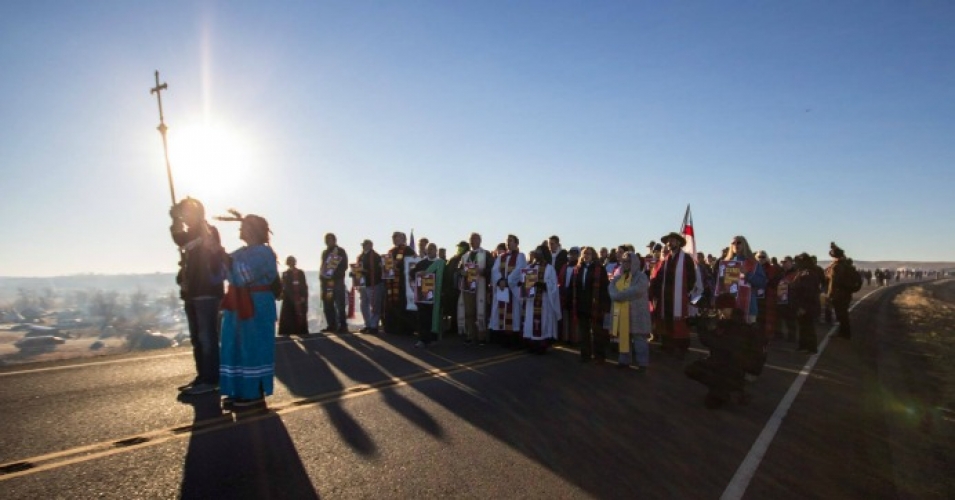
clergy at Standing Rock

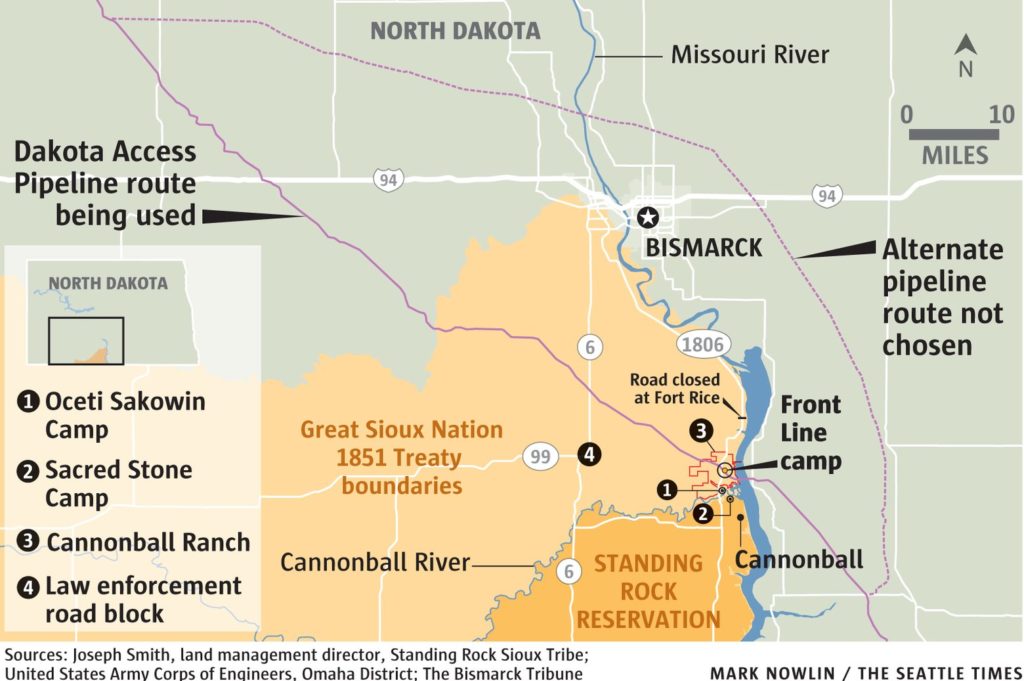
I was so honored to be able to attend the call for clergy at the Standing Rock Sioux reservation in North Dakota in their quest for witness in opposing the Dakota Access Pipeline (DAPL). The pipeline has been routed through treaty lands that have sacred meaning and remains from burials and battles, and would be buried under the Missouri River just above the the reservation, putting the Dakota Sioux living there in peril.

This map shows the issues clearly, the pipeline was rerouted from a northern route above Bismarck, ND, because imperiled the water supply of that city. So, as our nation has done for centuries, we allowed people who have little voice or perceived worth, to bear the danger. Look at the neighborhoods where coal power plants, pipelines, railroads and waste is dumped, and you will see neighborhoods and land of discrimination.

Pipelines map at Standing Rock

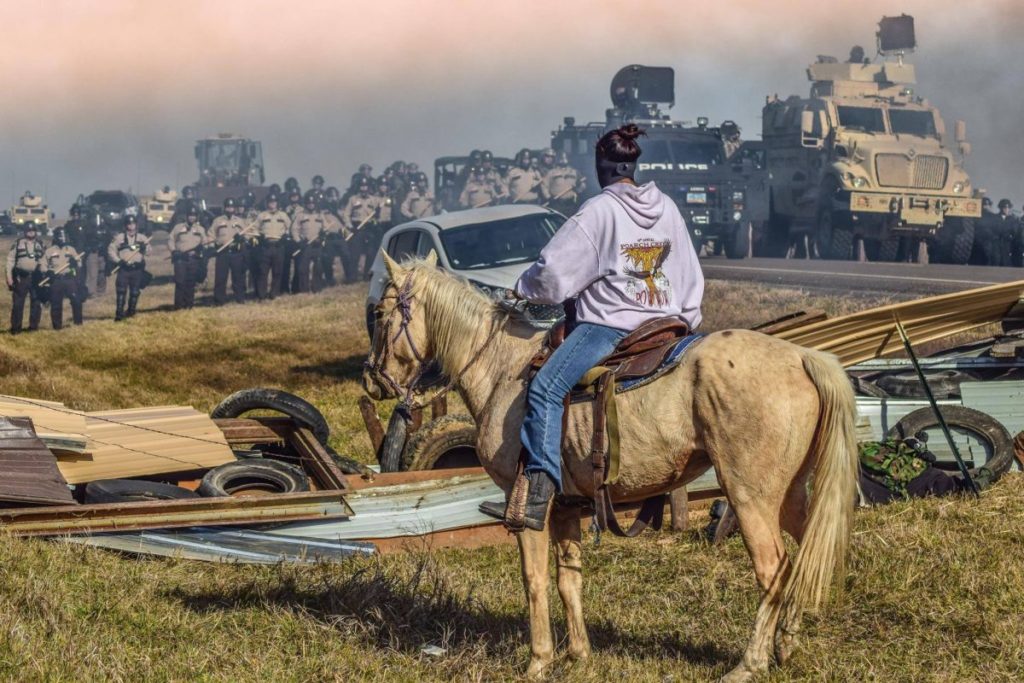
When DAPL began bulldozing sacred sites within the treaty boundaries, and the intent to put a crude oil pipeline under the water source for an already impoverished people realized, the Standing Rock Sioux and other tribes, activists and environmentalists swung into action. Their unarmed, non-violent, but admittedly active protests and encampments along the pipeline route were met with violence, vicious dogs, rubber bullets, pepper spray and a sonic cannon. Their pleas for the pipeline to stop were not heard, and they were removed from its path. Amid growing despair, the Elders and religious leaders of the reservation wondered what to do next. It was a moment that had similarities to another call, a bridge in Selma, and now the Backwater bridge in Cannonball, ND.

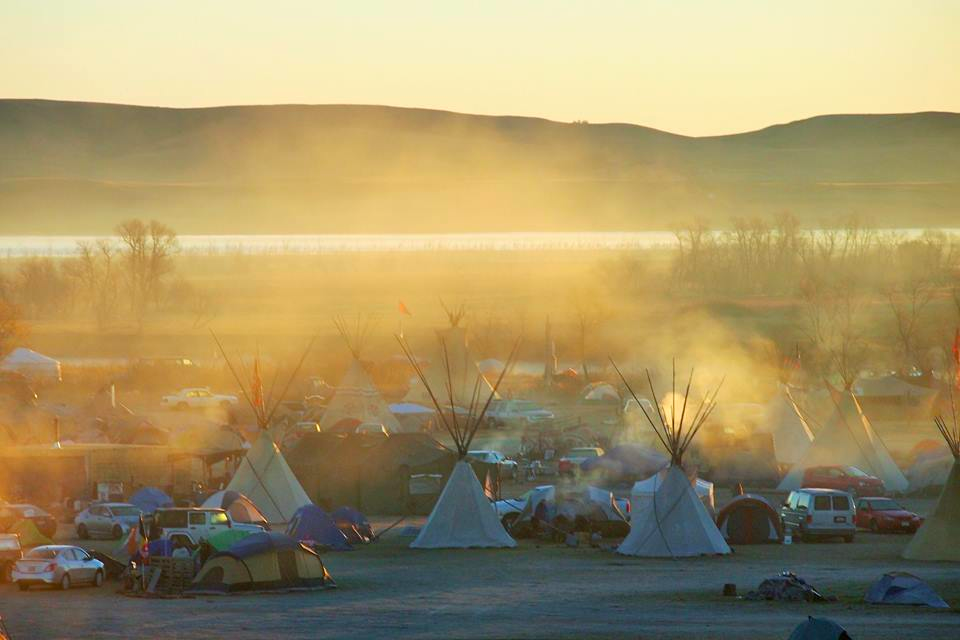
The call went out on social media in late October for clergy from all denominations to come to Standing Rock as witness to a civil rights and justice action, to acknowledge the right of a people to not have their lives threatened for corporate profit. The tribe Elders and organizer Father John Floberg were expecting around 100 clergy, over 550 answered and came. Over 50 Unitarian Universalists attended, including our President, Peter Morales. Episcopalian Priest Father John Floberg of the reservation’s Diocese, organized and led us in the action of witness. We met at the Water Protectors main camp of around 2000 folks, Oceti Sakowin, circled around their Sacred Fire, and heard a reading of repudiation of the Doctrine of Discovery, which is a central tenet to the oppression of native peoples around the world, and tacitly gave permission for a pipeline to endanger indigenous people in place of anyone in power.

View of camp at Standing Rock

Led by representatives of the tribes, the organizing Episcopalian Church, and leaders of the gathered denominations, we then walked to the bridge on the Cannonball river that marks the demilitarized zone between the Water Protectors and the militarized police that removed protestors and camps from the path of the pipeline.

The gathered clergy, Native Americans, and lay people prayed, sang and spoke of solidarity for over 4 hours, ending the action in a Niobrara Circle of Life, a circle of blessing each other, each and every one. We then took time to meet our hosts, help in the camp, and hear stories. I was thanked a number of times, sometimes with tears, for our witness, for giving the camp peace. I thanked them as well, for their sacrifice deeply touched me, they were on the edge of change, and I know I gained much from this encounter. There is a lot of what the protectors of Standing Rock are doing that needs to be done in my corner of Arkansas, and across this nation. I wonder what a true repudiation of the Doctrine of Discovery, and our own nation’s Manifest Destiny, might mean to our religion of Unitarian Universalism. I wonder how much of our struggle to be a truly diverse religion is because of the DNA of these doctrines of colonialism in our “soul.” I intend to find out… and I hope you help me by thinking about what you insist is UU, that doesn’t really have to be, and could be a barrier to our diversity.

I shared this greeting with Father John Floberg, to be given to the Elders of camp Oceti Sakowin:

Greetings from Northwest Arkansas, part of the Southern Region of the Unitarian Universalist Association. I bring well wishes and support from my ministerial colleagues in Oklahoma and Arkansas, and from the people in my ministry at the Unitarian Universalist Fellowship of Fayetteville, Arkansas. I am here representing these voices, these hands and hearts, who stand in solidarity with the Water Protectors of Standing Rock as we all ask for their sacred lands to be honored and remain unsullied, we ask that the bodies of Native Americans be counted as sacred, full of worth and dignity to be lifted up in equality with all in this Nation, and as a united people who deeply understand that water is life… that we must do everything we can to protect the waters of this land from further harm. We stand with you in this cause, and hope to prevail for the sake of all of our peoples, our children, and our grandchildren. We are one.

So may it be.

Filed Under: Beacon, Justice Tagged With: environment, Standing Rock

Why I Love Y’ALL

October 20, 2016 by Fawn Smith

Guest Post by Amanda Bancroft

I really don’t know how to begin writing about something so powerful and important in my life that I embarrassed myself immensely by crying with joy about it at a UUFF Board meeting once. Young adult ministry, like any UU ministry to any age group, is life-saving work. Introducing 18-35 year olds to the principles of UUism and the UUFF community can change lives with everything from access to OWL, comprehensive sexuality education, to “a place to go and be with people” on weekends and weekdays.

In Y’ALL, I can express and celebrate UUism with activities that speak to me. I can’t walk into a public space and go all flaming chalice. In Y’ALL, that is totally okay and encouraged. Results of a survey from last year indicate that the top three reasons people join Y’ALL are to make friends, have fun, and to share and learn about UUism with other UUs their own age.

Y’ALL began in 2012 but enjoyed an explosion of activity and membership in the past two years. In April, we went on a trip to the Eureka Springs Unitarian Universalist Fellowship where we met congregation members at a reception, did a historic walking tour of the underground, stayed overnight in the EUUF building, wandered the town, attended Sunday service and coffee hour. This is the second official Y’ALL trip we’ve done; the first one was a visit to All Souls UU in Tulsa Oklahoma for Youth Sunday 2015 (which was awesome!).

The first successful events that brought us together were Dream Circle dinners where we talked about what we wanted as YA UUs at UUFF. There are a variety of activities in Y’ALL that attract different people: weeknight coffee hours, 2nd and 4th Thursday night Cartoons for All Ages, weekday and weekend service projects like stocking stuffers, gardening at Tri Cycle or helping the homeless, overnight trips to other UU congregations, occasional hiking or fun events and spiritual discussions, dinners, and of course the coffee hour huddle after Sunday services. Y’ALL is also helping bring to life Linda Flores’ designs for a UUFF Little Free Library and Little Free Pantry near the building!

On movie nights for the past year (Cartoons for All Ages), we’ve been watching Avatar the Last Airbender cartoon series and Miyazaki films because they’re so UU! Themes in the Avatar cartoon series include peace, genocide, war, environmental justice, animal rights, worth and dignity for all people regardless of ability or identity, poverty, pollution, religious diversity and tolerance, spiritual growth, multiculturalism, racism, sexism, democracy, and more. Avatar Aang was listed as one of the most UU characters in UU World magazine. The films of Hayao Miyazaki focus on themes of environmental justice and peace against a beautiful backdrop of stunning artwork and believable, complex, thought-provoking characters.

This fall, the UA registered student organization “UU Razorbacks” will form the Campus Ministry wings of Y”ALL, promoting UUism and UUFF for students who may need this in their life.

Young adult ministry is life-saving work and I’m proud to be a part of it with the people who form my spiritual home.

Filed Under: Beacon, Y'ALL - Young Adults

To be Determined by Rev. Jim

September 19, 2016 by Fawn Smith

After a summer like the one I had, I really don’t want to do a “what I did” report… let’s just say that it was a very active summer, with family and friends. Some interactions were unexpectedly interesting; some joyful, and some difficult. I have to say that the summer was rich, varied and energizing in ways I did not expect, and left me with profound questions that are part of our human experience; being born, living, and having to die. I found that when I got into UUFF’s pulpit in August, for the first time in weeks, I felt like I had come home. I missed being with you, and missed the focus sermons bring, even though I know it is good to recharge the batteries by being away. Balance in all things!

This year I hope our Mission is woven all through our services, our religious education, our stewardship and our social justice work. We began this integration at our Board and Ministry Council Retreat held in August, where we talked about how our Mission leads into a Long Range Plan, with roles, responsibilities and goals.

The Board and committee/team leaders explored creating goals from the Mission that match their roles and responsibilities to the Fellowship. Within this missional goal-setting there will be shared Themes to work with… so we have Services, RE curriculum, and Social Justice working together in an underlying framework.

Our Mission is this: As a diverse, accepting faith community, we promote justice and service while seeking personal and spiritual growth.

Our Mission compels us to: Work to understand what diversity means in our changing the world and become multi-culturally capable, to have clear justice works in progress through education and outreach, and to have meaningful religious exploration opportunities for youth and adults- including worship. It also compels us to be stewards of our Unitarian Universalist faith– to not just maintain, but to grow it for the future.

And when I say “faith,” because we do believe in things seemingly unproven and yet manifest in life, I mean that we believe in the innate oneness and goodness of humanity, in our interconnection to all. We believe that justice and peace can be attained in the long arc of the universe, no matter the present turmoil (which is part of change). Some of these beliefs are being proven in scientific ways. Empathy and altruism are part of our DNA; yet humanity has the ability to be cruel, divisive and deadly.

But with our continued work within UUFF, and with allies, we know life can get better.
I personally believe that the successful work done to promote the citizenship and equality of LGBTQ folks is proof of our beliefs… that the turmoil caused by lifting the veil of racism in our culture is proof that there is deep work still to be done. We have a mission, and it is not just to paint the building or keep the lights on (though we build community in this); it is to be a beacon of truth, freedom and liberal religion in NWA. It begins with us- learning how to be anti-racist, to be culturally capable, to be leaders and allies, to become deeply educated and spiritually motivated people that move the world by our modeling and works.

It was fun to talk with students at the University’s Razorbash in August, describing UU to them. Many times we’d talk and agree that religion should let an individual explore their inner being in a loving community, look for answers to the meaning of life that make sense, and find what will motivate them to be good people. We strive to do good works, to live in harmony with diversity, to understand what justice means, to continue to learn, teach what they learn, and be good stewards of life in its interconnections. Students at the U of A would look at me like, “There is a religion that does this?” I got to say, “Yes- it is us; it is UU.” And all I did was describe our Principles and Mission.

At our Blessing of the Backpacks Service in late August, we let our students, teachers and administrators know that they are held up by our community in their work to teach and learn, and that they represent us in their endeavors as well. All of us at UUFF are Unitarian Universalist in our lives and livelihood, and we have a mission that goes beyond our walls. We sang, “This Little Light of Mine, I’m Gonna Let It Shine,” to close the service, and that is what we’ll do. It’s what we’ve historically done in the arc of the universe, always have, and hopefully, always will.

So May it Be,
Rev. Jim

Filed Under: Minister's Blog

Our Arkansas UU Cluster of Congregations

September 17, 2016 by Fawn Smith

Unitarian Universalism is a covenanted, congregational religious organization. We are joined in covenant around our Principles, and bound to help each other as needed. This help is typically thought of as through the UUA or Regional staff, but in reality we are bound congregation to congregation as well. This goes back to our early history; with no central governance like a diocese (and the UUA is not), congregations are charged to be in covenant with each other to help, support and provide guidance as needed. This is our Congregational Polity…each congregation owns itself, but is bound to each other by common cause.

Our regional cluster helps us understand that we are not doing Unitarian Universalism alone, that we do have common cause, and we can share expenses (both monetary and volunteer) to get a larger thing done. It also lets more of us enjoy the company of other UUs since travel and costs to General and Regional Assemblies, and other far flung UU events, can be prohibitive. And frankly, we need each other!

Our Arkansas Cluster serves this, and other purposes. It brings us together so we might know names and faces as Unitarian Universalists across the state, provide avenues to share support, resources and wisdom, and give rise to collective action on our Principles. Cluster meetings have provided leadership training, formation of a Social Action Network, discussed governance issues, reviewed our Racial Justice capabilities and more. We sing and dance, argue and cry, share music, poetry and meals together. We’ve invited each other to our different Fellowships and Churches so we know our people and spaces, and we’ve got to know each-other’s strengths and needs.

How we do cluster now may not be how we do it in the future, but as it is, we are enjoying each others’ company and wisdom. We may expand to include nearby churches in Oklahoma and Tennessee, morph into sub-groups, or spin off mini-assemblies. No matter how, we’ll continue sharing leadership skills/training, religious education initiatives, team building events and activities, and Social Justice organization. With the addition of technology (a subject that is coming up) we can have meetings and plan social activities even easier!

Even if the main topic of a particular cluster meeting is not exactly what you want, come anyway to enjoy the company of your fellow UUs and help plan a cluster activity that will. We tend to grouse about how things are done, General Assembly too expensive or the UUA is too remote, etc., so here is a chance to get things done “locally.” Get to know your UU neighbors, participate, and advance our movement in a state that surely and sorely needs us to be organized and have a strong collective voice. Oh… if you have a better name than a “cluster” please propose it! Thanks!

Peace, Rev. Jim Parrish

Filed Under: Minister's Blog Tagged With: UU Cluster

Jan 1 – Be the Change You Wish to See

January 1, 2012 by Fawn Smith

Filed Under: 2012 Sermons, Sermons

June 27: UUFF GLBT Pride Service

June 30, 2010 by Fawn Smith

Music Director Renee Janski led a multifaceted service to top off Northwest Arkansas’ Pride Month.

Filed Under: 2010 Sermons, Sermons

« Previous Page

Primary Sidebar

  • About
  • New Here?
  • Our Fellowship
    • Mission & Vision
    • Welcoming Congregation
    • Location & Parking
      • Accessibility
      • Garden & Grounds
      • Buildings & Rental Spaces
    • Childcare
  • Our Faith
    • Sermons Library
    • UU Principles and Sources
    • The Flaming Chalice
    • Who are UUs?
  • Justice
  • Find Community
  • Upcoming Events
  • UUFF eNews
  • Participating via Zoom

Events

  • Adult RE "Mindful Discussions" - Sundays at 10AM in the common area downstairs
    • 02/08/2026
  • Children's Religious Exploration (CRE) for kids 5-10 years of age is offered each Sunday at 10am Downstairs!
    • 02/08/2026
  • Youth Religious Exploration (YRE) classes are offered for ages 11+ each Sunday at 10am downstairs!
    • 02/08/2026
  • Adult RE "Mindful Discussions" - Sundays at 10AM in the common area downstairs
    • 02/15/2026
  • Children's Religious Exploration (CRE) for kids 5-10 years of age is offered each Sunday at 10am Downstairs!
    • 02/15/2026
  • Youth Religious Exploration (YRE) classes are offered for ages 11+ each Sunday at 10am downstairs!
    • 02/15/2026
  • Adult RE "Mindful Discussions" - Sundays at 10AM in the common area downstairs
    • 02/22/2026
  • all events
  • Blog Post Categories

    Footer

     
    Unitarian Universalist
    Fellowship of Fayetteville

    901 W. Cleveland St.
    Fayetteville, AR 72701

    Directions & Parking

    About Us

    Our mission as a diverse faith community is to promote justice and service while seeking personal and spiritual growth.
    Learn More about UUFF.

    Newcomer, Seeker, or Just Curious?
    We invite you to visit our fellowship.

    Sunday Schedule

    Offered at UUFF:

    Main Service at 11 AM

    Adult Religious Exploration Discussion Group – 10am (in downstairs common room)

    Children’s Religious Exploration Class – 10am (in classroom downstairs)

    Youth Religious Exploration Class – 10am (in classroom downstairs)

    Meditation Group – 9am (via zoom only-continues through summer)

    Childcare (downstairs) is available each Sunday  during the 10am Religious Exploration hour and the 11am Service.

    Get in Touch

    (479) 521-8422
    Office@uufayetteville.org

    Join us on Facebook

    Follow us on Instagram

    Weekday Office Hours
    Monday-Friday 10am-2pm

    • HOME
    • ABOUT
    • CONTACT US
    • SERMONS
    • EVENTS
    • FIND COMMUNITY
    • ARCHITECT RESOURCES

    © 2026 · Unitarian Universalist Fellowship of Fayetteville · Privacy Policy · Site Map